
Constructing the MAVIS flying wing is a rewarding and precise process, designed to combine traditional modeling skills with the benefits of digital accuracy. With a lightweight balsa-and-carbon structure and DXF plans optimized for laser cutting, MAVIS is an ideal platform for compact, efficient flight.
Laser Cutting the Parts
Begin by cutting the provided DXF file from balsa & ply sheets. The plan includes labeled parts with clean tab-fit geometry, ideal for fast and accurate assembly.
Fuselage Assembly
The fuselage is formed by interlocking ply & balsa parts, creating a lightweight yet rigid central structure. Assembly is straightforward thanks to the keyed design.
Wing Construction
The wing is built by threading precision-cut 2mm balsa ribs onto a carbon tube spar. This method ensures proper airfoil alignment and strength without adding unnecessary weight. Ensure ribs are square before fixing in place.
Electronics Installation
Install the motor mount, servos, and linkages. MAVIS is designed for a small electric brushless setup with centralized component placement to maintain balance. All servo bays and cable routes are pre-positioned in the design.
CG & Control Setup (Important!)
Center of gravity is critical for proper flight performance — follow the included CG diagram carefully. Even a few millimeters off can cause instability or loss of control.
For maiden flights, start with 70% exponential (expo) and 60% dual rates on both elevons to ensure smooth, predictable handling while you trim and tune the model.
Final Assembly & Finish
After verifying alignment and electronics, complete the build with light sanding and covering with oralight foil. Keep weight minimal to preserve flight characteristics.
Maiden Flight
With the correct CG and expo/rate settings, MAVIS offers a stable, responsive flying experience. Ideal for park flying, testing, or even lightweight FPV.
Recommended Setup
- Power: Electric Brushless motor: 1108 4000KV
- Battery: 2S 350mAh LiPo
- Servos: 2 × KST X06 (or similar 6g digital servos)
- Receiver: any lightweight receiver


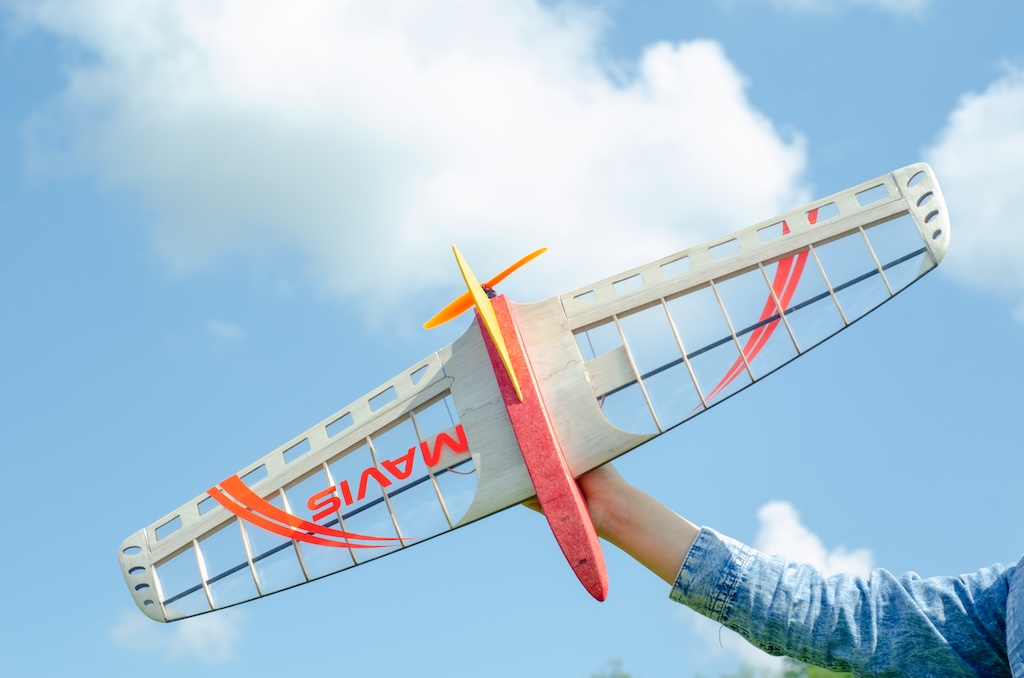


Tip: MAVIS is a great platform to learn and experiment. While the build is simple, attention to detail in balance and control setup makes all the difference in the air.
Leave a Comment
Your email address will not be published. Required fields are marked *